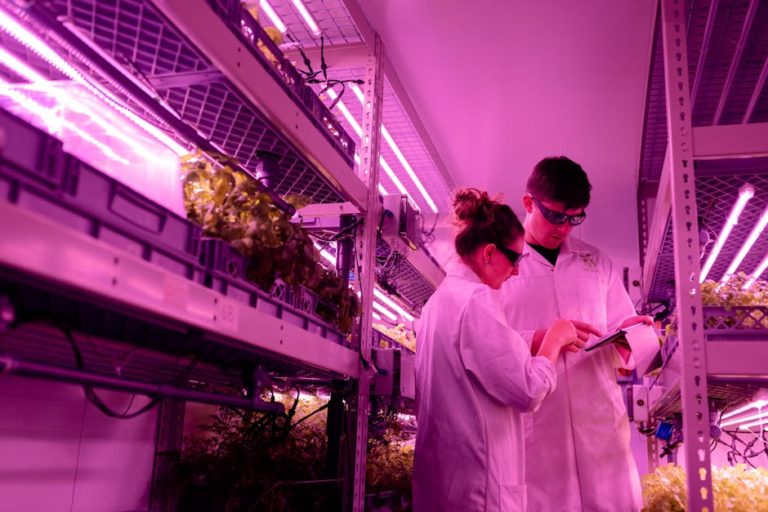
Why real-time monitoring matters
Farmers can swiftly detect crop and soil issues and take immediate action. Wireless sensors track temperature, moisture levels, humidity, VPD, and light in real time — optimizing crop growth, preventing disease, and ensuring efficient water usage. Every hour of undetected drift translates directly to yield loss.
Wireless sensor types
Devices measure temperature, humidity, light, and soil moisture wirelessly, transmitting information to a central system for analysis. Neo-1D reads ambient air conditions with VPD; Neo-1P drops in as a soil or substrate probe.
Key benefits
- Improved precision — real-time data enables tight control of conditions
- Cost efficiency — optimized resource usage (water, light, heat) cuts operating cost
- Enhanced productivity — optimal conditions mean higher yield per square foot
- Sustainability — reduced waste from over-watering or over-conditioning
- Convenience — remote data access, alerts to any device
Crop productivity
Real-time data enables growers to monitor and make timely adjustments that optimize crop growth. Spotting a humidity spike before it turns into powdery mildew saves an entire flush.
Sustainability and resource management
Monitoring reduces waste and conserves resources by tracking soil moisture, temperature, and crop growth — enabling efficient water usage and timely disease prevention. For commercial operations this is often a direct contributor to sustainability certification and audit-ready records.
Decision-making from real-time data
Farmers access live readings on soil moisture, temperature, and humidity to quickly respond to changes and make timely decisions. Historical graphs make it obvious when a ventilation system is under-spec for a growing zone or when a watering schedule needs adjustment.